



Alloy Wheel Repair: Complete Guide to Fixing Damaged Alloys

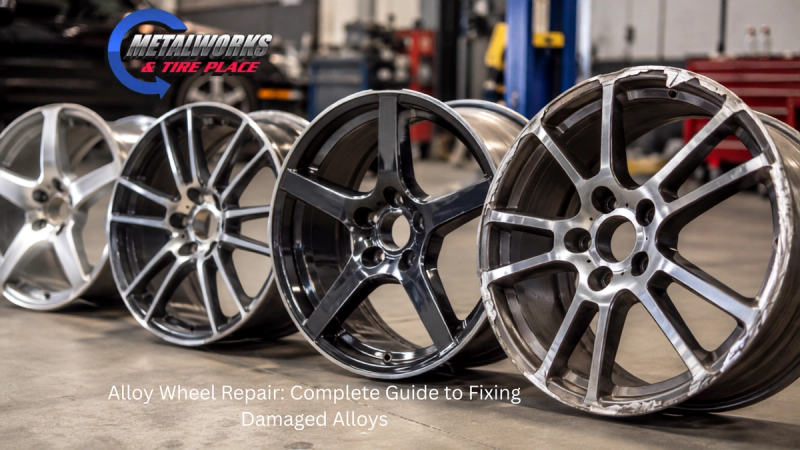
Yes, your damaged alloy wheel can almost certainly be repaired. You rarely need a replacement, and a professional fix restores both the look and the structural integrity.
A pothole, a curb, a piece of road debris: any of these can bend, crack, gouge, or scuff an alloy wheel in an instant. But what's fixable and what isn't depends on where the damage sits and what kind of force caused it.
When You Can Fix It and When You Need a Replacement
This is the question every driver asks first, and it's worth answering before anything else.
Your wheel can be repaired when:
- The bend is on the barrel or lip, not the center hub
- The crack is on the barrel and can be safely welded
- The damage is cosmetic: curb rash, scratches, corrosion, a faded finish
- The wheel holds air, or can be made to hold air after repair
- A single crack came from a single impact event
Your wheel needs to be replaced when:
- The crack runs through the center hub or mounting surface
- The wheel is cracked in multiple locations from a severe impact
- A spoke is cracked or fractured
- The bend has compromised the metal's grain structure beyond what straightening can safely restore
- The wheel has been repaired multiple times and the metal is fatigued
The line comes down to one thing: whether the damaged area carries structural load. Once damage reaches the hub, the mounting surface, or a spoke, the forces acting on that part of the wheel are too high for any repair to be trusted. A reputable shop will inspect your wheel and tell you honestly which side of that line it falls on before any work begins.
Why Your Alloy Wheel Cracks Instead of Bends
Alloy wheels are made from a blend of aluminum and other metals, cast or forged into shape and machined to a smooth finish. Compared to steel wheels, they're lighter (which improves handling, acceleration, and fuel economy), stronger per pound, and better at dissipating brake heat. They're available in machined, painted, polished, and powder-coated finishes.
But aluminum alloy behaves differently than steel when it takes a hit. Steel bends and tends to stay bent. Alloy is more rigid, which means it can crack or fracture under heavy impact instead of bending.
This matters because a bent alloy wheel may look perfectly fine while being out of round enough to cause vibration, uneven tire wear, and slow air leaks. It also means alloy wheel repair is a precision structural repair, not a cosmetic fix.
Five Types of Damage and How Each Is Handled
1. Bent Wheels

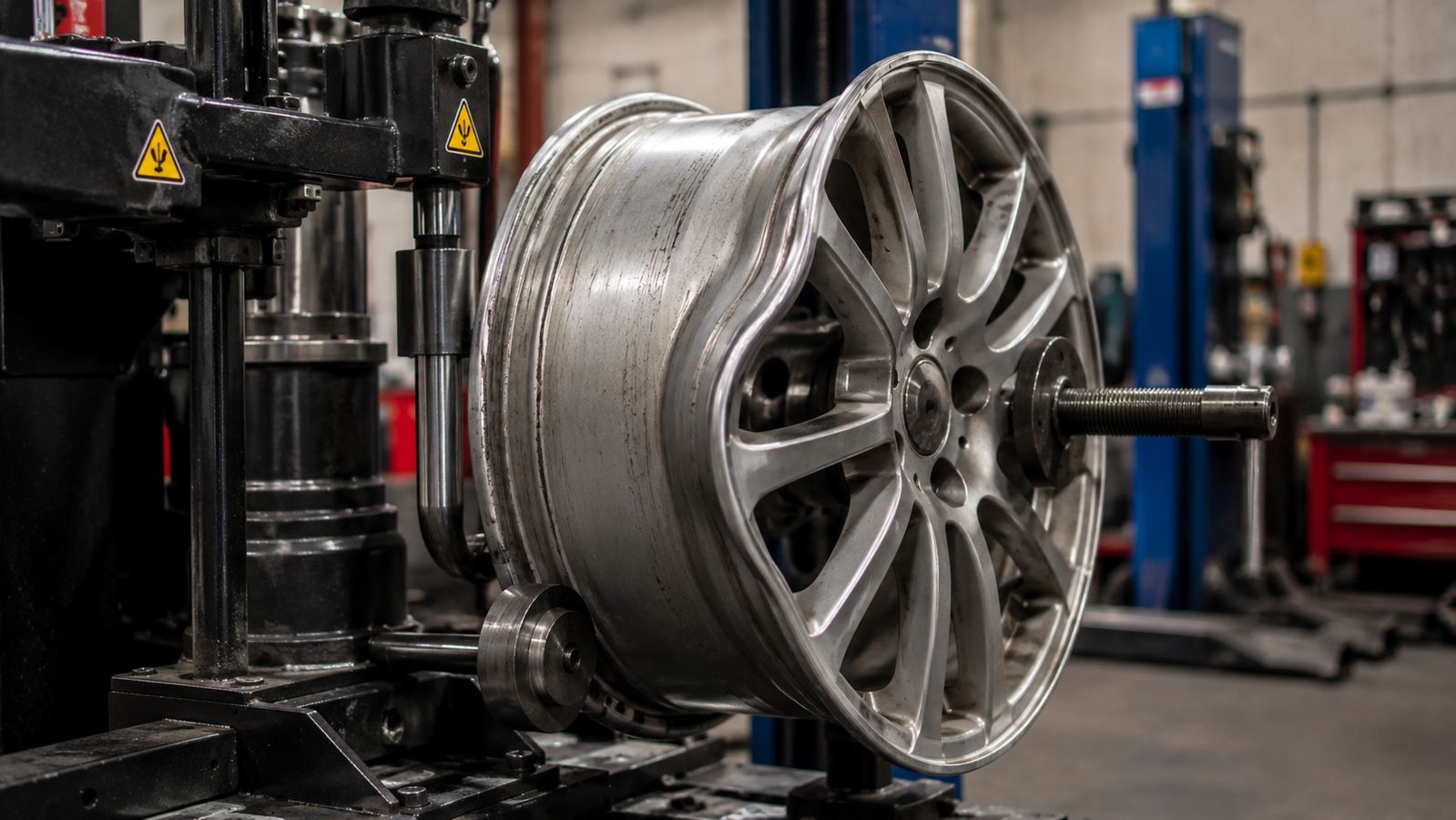
If your steering wheel shakes between 50 and 70 mph, a bent rim is one of the first suspects. The cause is almost always a pothole, a speed bump taken too fast, road debris, or a curb strike. The force bottoms out the tire and transfers energy straight into the rim. You might also notice a rhythmic thumping sound, a tire that slowly loses air, or the vehicle pulling to one side.
A bent alloy wheel can be straightened in most cases using hydraulic equipment that reshapes the metal back to factory tolerances. The one exception is a bend at the center hub or mounting surface, where the structural load is too high for a safe repair. See our guide to the signs of a bent rim and our wheel straightening service for more detail.
2. Cracked Wheels

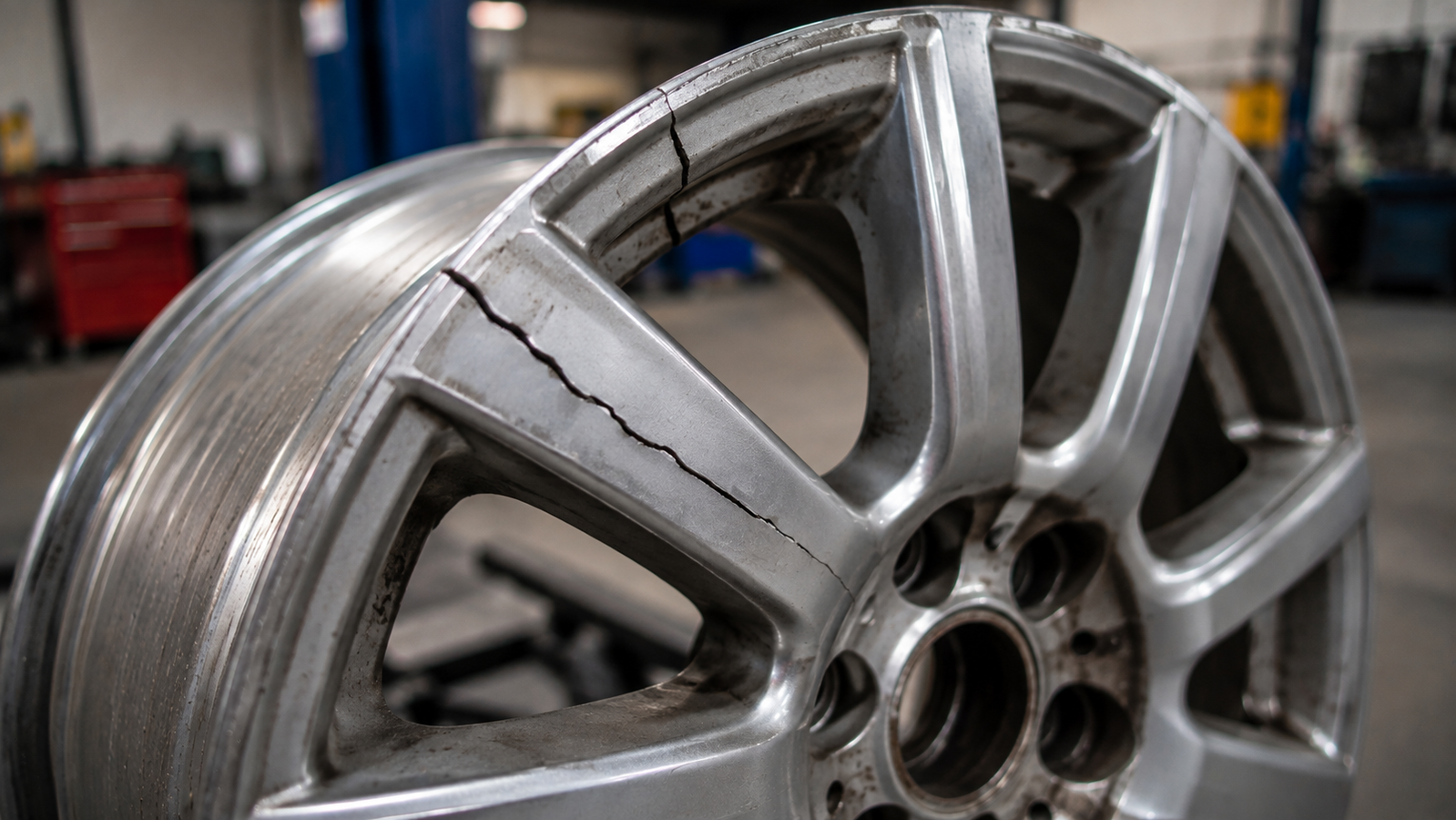
A crack is the one type of damage you should not ignore. The cause is usually a hard impact: a deep pothole at speed, hitting a curb, or sometimes manufacturing stress accumulating over time. The symptom is a slow air leak that won't stop, a visible crack on the spoke or barrel, or a tire that goes flat overnight.
Cracks on the barrel can be welded and reinforced. Cracks through the center hub or across spoke faces are not safe to repair, and the wheel should be replaced. If you suspect a crack, don't drive on it. A cracked wheel can fail suddenly under load.
3. Curb Rash and Scratches

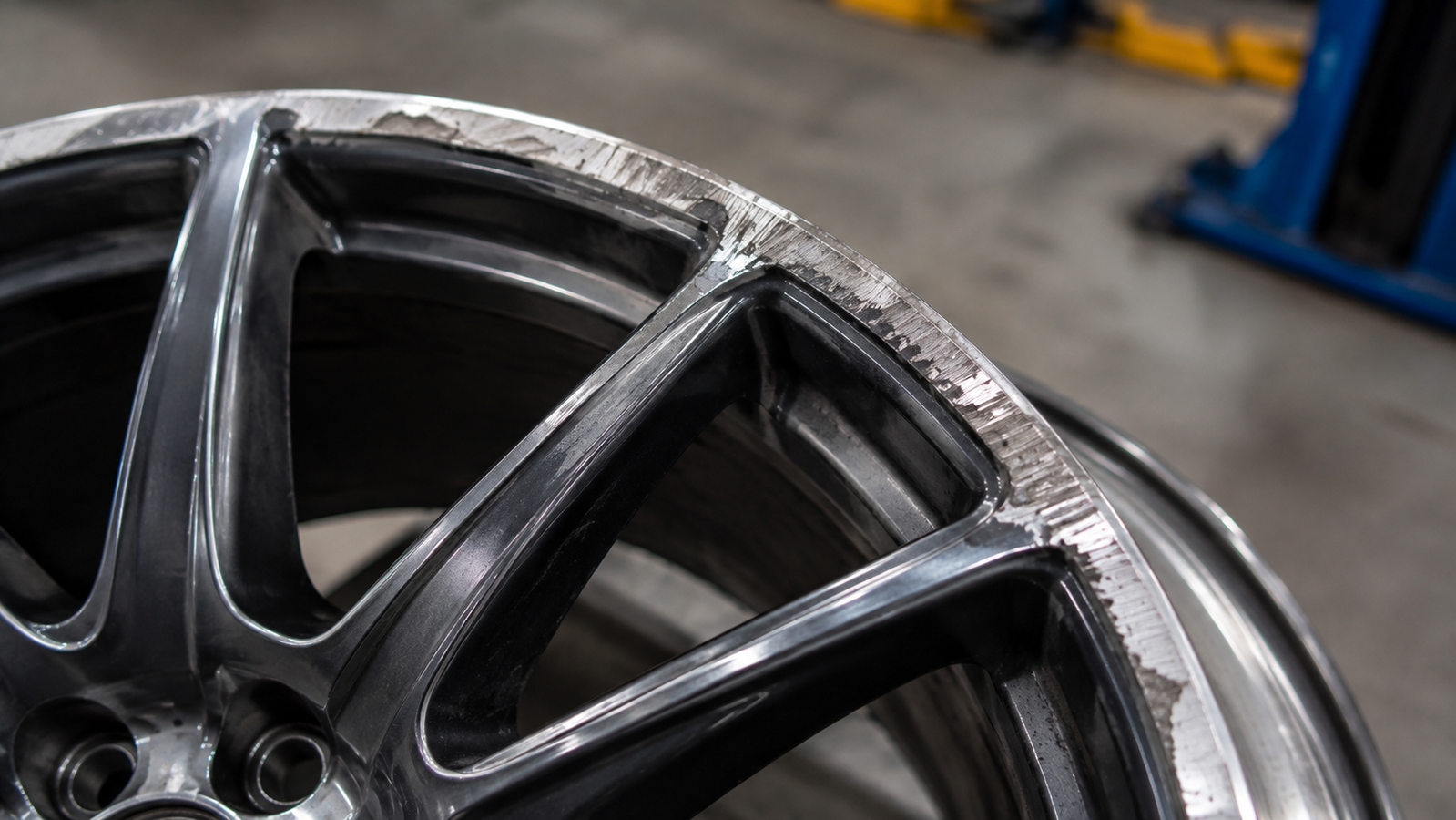
This is the damage you see every time you walk up to your car and wish you'd parked differently. Scraping a curb while parallel parking, brushing a concrete median, or catching a raised island strips the finish off the outer lip of the wheel, often down to bare aluminum.
Curb rash is almost always repairable as a surface-level fix. The damaged area is sanded smooth, filled if necessary, and refinished to match the original finish, whether that's paint, powder coat, machined aluminum, or polished. Most curb rash repairs are invisible when done correctly.
4. Corrosion and Oxidation

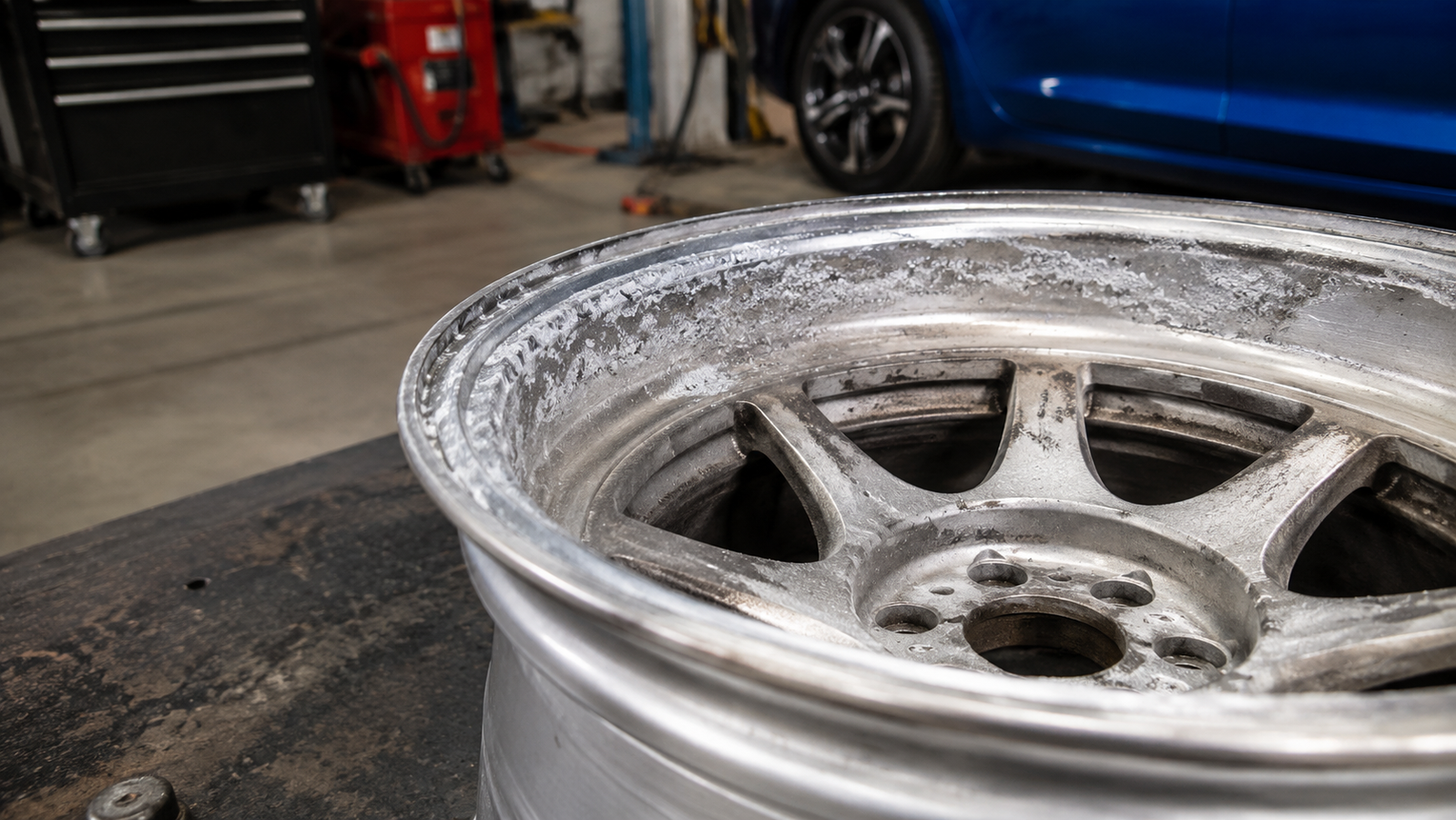
Corrosion doesn't happen from a single event. It builds over time from road salt, brake dust, and moisture trapped under the clear coat. Aluminum doesn't rust like steel, but it does oxidize, producing a chalky white or pitted surface that can eat into the metal. You might see bubbling under the paint or clear coat, a rough surface, white powdery residue, or a slow leak from the bead seat where corrosion has broken the tire's seal.
The fix is to strip the wheel to bare metal, treat and smooth the corroded areas, and apply a new finish. Bead seat corrosion is one of the most common causes of slow leaks, and it needs to be cleaned and resealed during any repair.
5. Gouges and Deep Scoring

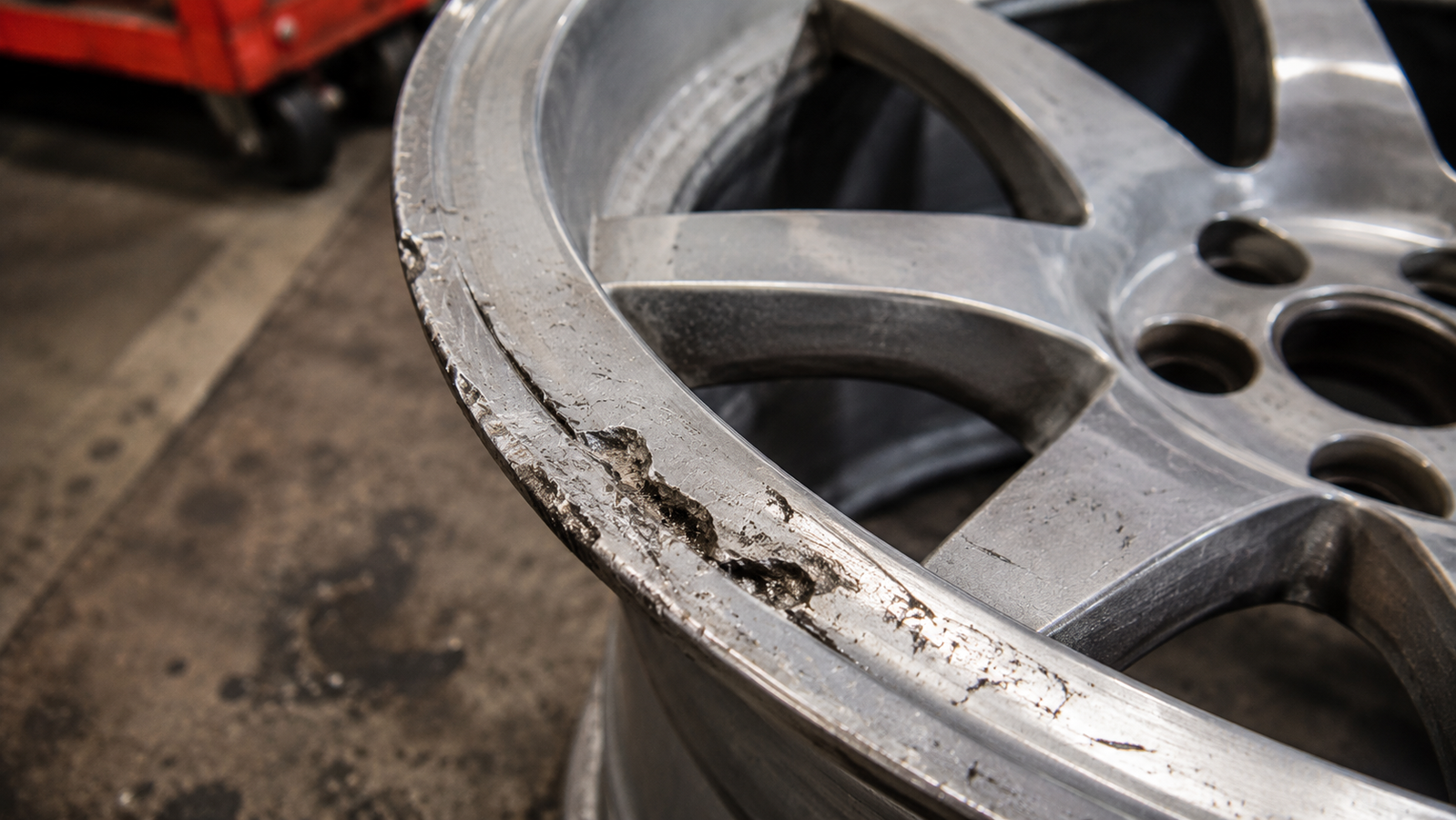
A gouge means actual material is missing from the wheel. The cause is hard metal contact: driving over steel debris, hitting a rock, or a severe curb impact. You'll see deep grooves or scoring on the wheel surface, sometimes with cracking at the edges.
Surface gouges can often be filled and refinished. Deep gouges that have removed significant material from a spoke or barrel may compromise the wheel's integrity, and replacement is the safe call. A professional inspection is the only way to know for sure.
What Happens at the Shop: The Professional Repair Process
A proper alloy wheel repair is a sequence of processes that may involve straightening, welding, filling, and refinishing depending on the damage.
Step 1: Inspection and Diagnosis
The wheel comes off the vehicle and goes onto a measuring fixture that checks for runout, the technical term for how far out of round the wheel is. The technician identifies bends, cracks, corrosion, and cosmetic damage, then determines which repairs are needed and which areas are safe to work on. This is also when you find out whether the wheel is repairable at all.
Step 2: Structural Repair
If the wheel is bent, it goes onto a hydraulic straightening machine. The technician applies controlled pressure to specific points to push the metal back into its original circular shape. Localized heat makes the aluminum malleable without weakening it, because applying too much force cold can crack the metal.
If the wheel is cracked, the crack is ground out to clean metal and re-welded using a TIG welder designed for aluminum alloy. The weld is then ground smooth and pressure-tested to confirm it holds air.
Step 3: Surface Preparation
The old finish is stripped to bare metal. The wheel is media-blasted to open the metal pores and remove contaminants. Gouges, scratches, and curb rash are sanded and filled. Mounting surfaces, the valve stem hole, and the tire bead area are masked off.
Step 4: Finish Application
The refinish depends on what you want and what the wheel originally looked like:
- Paint for a factory look. Color-matched liquid paint, cleared and cured.
- Powder coat for maximum durability. Electrostatically applied powder is heat-cured into the metal, resistant to chips, brake dust, and UV. This is the most popular finish for repaired wheels.
- Machined finish for a reflective aluminum look. The wheel goes on a CNC lathe and the face is cut smooth, then clear-coated.
- Polished aluminum for a mirror finish. Striking, but requires regular maintenance.
Step 5: Reassembly and Balance
The tire is remounted if it was removed. The wheel goes on a computerized balancer for a road-force balance. The assembly goes back on the vehicle, and the technician confirms there's no vibration, the wheel holds air, and the finish is clean.
DIY: What You Can and Can't Do
Search for "how to repair alloy wheels" and you'll find dozens of YouTube tutorials showing DIY curb rash fixes using sandpaper, filler, and touch-up paint. Some produce decent-looking results for minor cosmetic damage. But there are hard limits.
You can handle these yourself:
- Light surface scratches that haven't reached bare metal
- Small touch-up spots using wheel-safe paint
- Cleaning and polishing to restore shine
Leave these to a professional:
- Bent wheels. Straightening requires a hydraulic machine and precision measurement. Hammering a wheel straight will crack the alloy.
- Cracked wheels. Alloy welding requires a TIG welder, argon gas, specific filler rod, and experience. A bad weld can fail at speed.
- Structural gouges. Only a professional can tell whether a gouge in a load-bearing area is safe to repair.
- Full-wheel refinishing. A smooth, durable finish requires stripping, media blasting, and proper curing equipment. A rattle can in the driveway won't get you there.
The results of DIY rarely match a professional repair, and attempting structural repairs without the right equipment can create a wheel that looks fine but is dangerous to drive on.
How Long Does Alloy Wheel Repair Take?
Timelines vary by damage type and shop workload. Here's what to expect:
- Curb rash / cosmetic refinish: 1 to 2 business days
- Bent wheel straightening: same day to 1 business day
- Cracked wheel welding plus refinish: 2 to 3 business days
- Full refinish (powder coat): 2 to 3 business days
- Multiple wheels or combo repairs: 3 to 5 business days
The Real Cost Is Driving On Damage You Shouldn't
Most drivers see a bent, cracked, or curbed wheel and assume replacement is the only option. Most of the time, that assumption is wrong. A professional repair costs a fraction of a new wheel and restores both the look and the structural integrity.
The real risk isn't paying for a repair you didn't need. It's driving on a damaged wheel that should have been fixed or replaced, and finding out why at highway speed.
A free inspection answers the question. You'll know exactly what's wrong, what it costs, and whether the wheel is safe to keep.
If your wheel is bent, cracked, curbed, or corroded, Metalworks & Tire Place in Santa Ana handles all of these repairs in-house. Walk-ins are welcome at the shop, and we'll tell you straight whether your wheel can be saved. You can also reach us at (714) 654-1599 or through our contact page whenever you're ready.