



Can You Weld a Cracked Rim Safely?

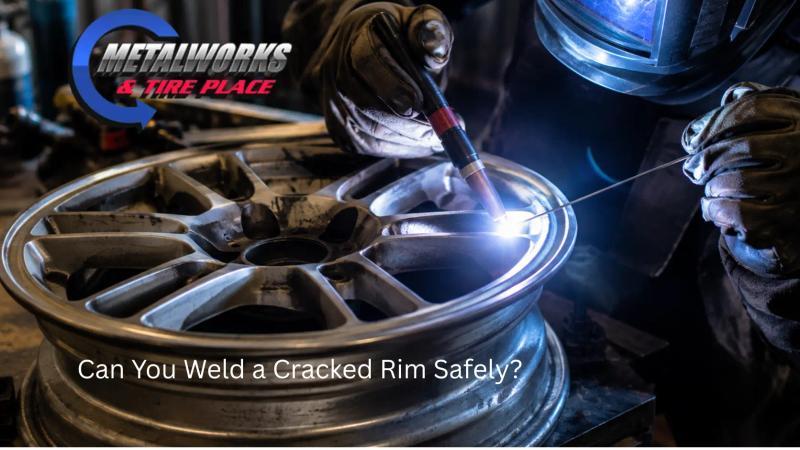
Yes, you can weld a cracked rim in most cases. That's the honest answer to "can you weld a cracked rim," and it's the one most shops will give you without much hesitation.
What they won't always tell you upfront is that the crack's location matters more than the crack itself, and getting that part wrong is how a straightforward repair turns into a wheel that fails you on the freeway six months later.
Cosmetic Crack vs. Structural Crack: Why Location Matters
Not every crack in an alloy wheel is the same crack. A small fracture on the outer lip, the part that takes the hit when you clip a curb, behaves nothing like a crack running through a spoke or across the center face where the hub bore sits.
The lip and barrel handle less load. A clean weld there, done by a qualified welder, can restore the wheel's shape and hold up under daily use. The center face is a different story. The wheel absorbs the constant flex of your car's weight through that section, and a crack there is often a sign the wheel's underlying strength has already given way. Welding over that kind of damage covers up the underlying problem instead of fixing it.
This is the first question any rim repair shop should ask before touching a torch to your wheel: where exactly is the crack, and does that location mean a repair that lasts, or a weld that just buys a few quiet months before the wheel fails again.
Why Rims Crack in the First Place
Most cracked rims trace back to one of three causes. A pothole or curb impact delivers a sudden shock the metal wasn't built to absorb. Corrosion works more slowly, eating into the metal over years until a stress point gives way. And occasionally, a casting flaw from the original manufacturing process, a pocket of porosity buried in the aluminum, creates a weak spot that was never visible until the wheel finally failed.

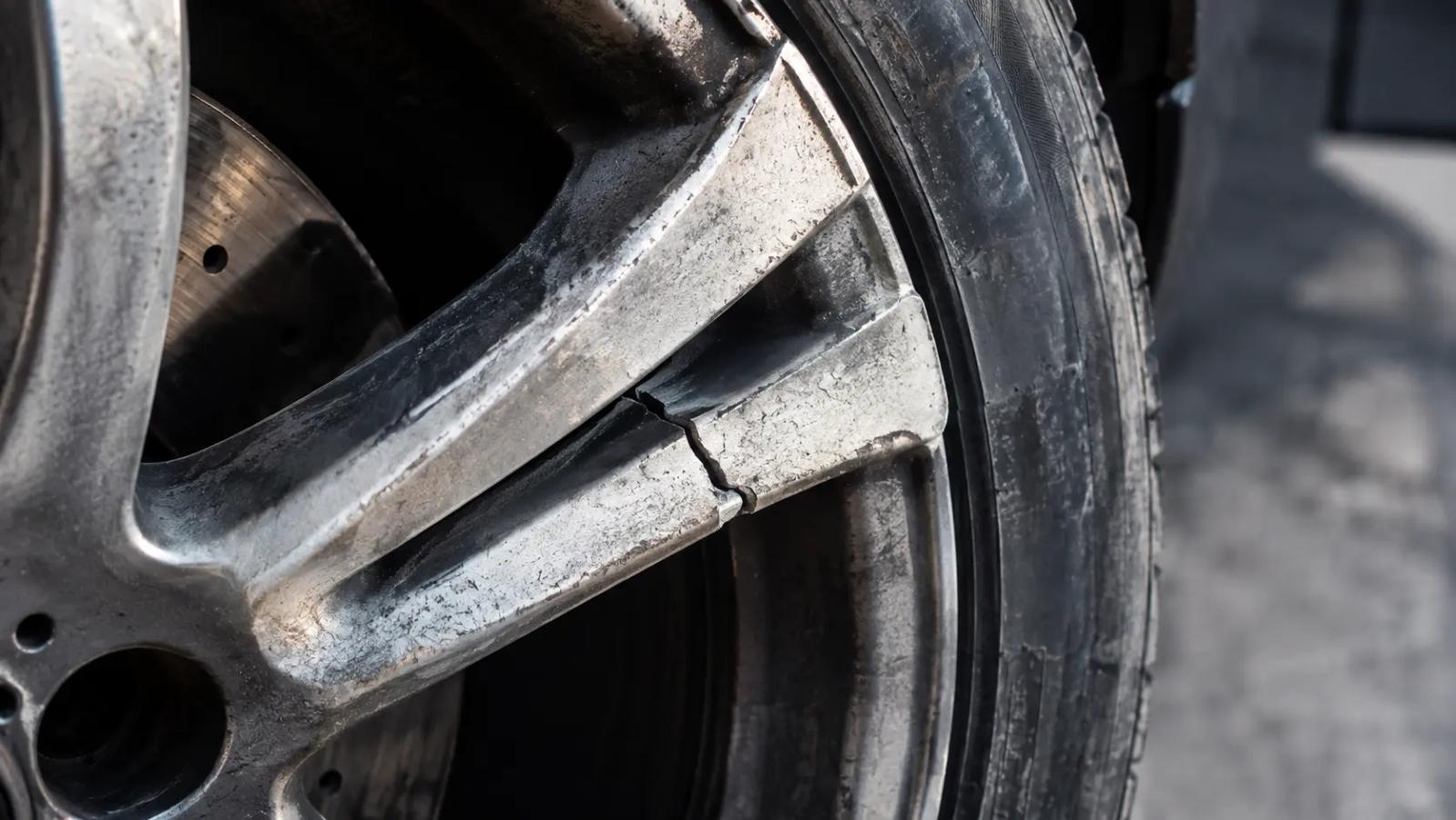
Cast aluminum rims are more prone to this than forged ones, simply because the casting process leaves more room for inconsistency in the metal's structure. That's not a defect you did anything to cause. It's just how the wheel was made.
A cracked wheel rarely announces itself all at once. Watch for:
- A vibration through the steering wheel that gets worse at highway speed
- The car pulling slightly to one side
- A tire that keeps losing pressure with no visible puncture
- A visible line or split in the metal, sometimes only noticeable after cleaning the wheel
Any one of these is worth having looked at. Ignore a growing crack or a slow leak long enough and you're not just risking a repair bill. You're risking a blowout at speed.
How Wheel Welding Actually Works
TIG welding, gas tungsten arc welding, is the standard for wheel repair, and there's a reason gas metal arc welding rarely shows up in this line of work. TIG gives a welder far more control over heat input, which matters enormously when you're working with aluminum. Too much heat and the metal deforms or weakens. Too little and the filler material never properly fuses with the base.
Done correctly, the repair process starts with assessing the damage, not welding it. A qualified technician cleans the damaged area completely, checking for contaminants and often using a dye penetrant to reveal the true extent of the crack, since what's visible on the surface doesn't always match what's happening underneath. Only once that's confirmed does the actual welding begin, usually in multiple weld passes to build the joint back up without overheating the rim material.
After the weld cools, the area gets machined and refinished so the repaired section matches the profile of the rest of the wheel, whether that's a fresh coating, a diamond cut, or a full powder coat depending on what the wheel needs. A weld that's done well but finished poorly still looks like a repair. The gold standard is one you can't find without knowing exactly where to look.
There's a reason all of this care matters more than it looks like it should. The metal right next to a weld, the heat-affected zone, never quite returns to its original strength once it's been through that much heat. Testing on aluminum wheel welds has shown a measurable drop in tensile strength in that zone compared to the untouched metal around it. The current a welder runs matters too. Too low and the joint doesn't fully fuse; run it right and the repaired section holds up to real impact far better than a rushed pass ever would. Paying for a qualified technician instead of the cheapest quote in town comes down to exactly this. It isn't about the finish looking clean. It's about the joint holding.
Can Every Cracked Rim Be Welded?
Traditional welding is a reliable, cost-effective solution for a single crack in a repairable spot, and it's almost always cheaper than a new wheel. It's a much harder sell when you're dealing with several fractures, a crack that runs into a critical area near the center bore, a wheel that's already bent out of true, or one that shows a visible prior weld from an earlier repair attempt. Weld over a crack like that and the problem stays put, quietly working toward a second failure. The wheel can crack again in the same spot, often without warning, because the weld never addressed why the metal failed there in the first place.

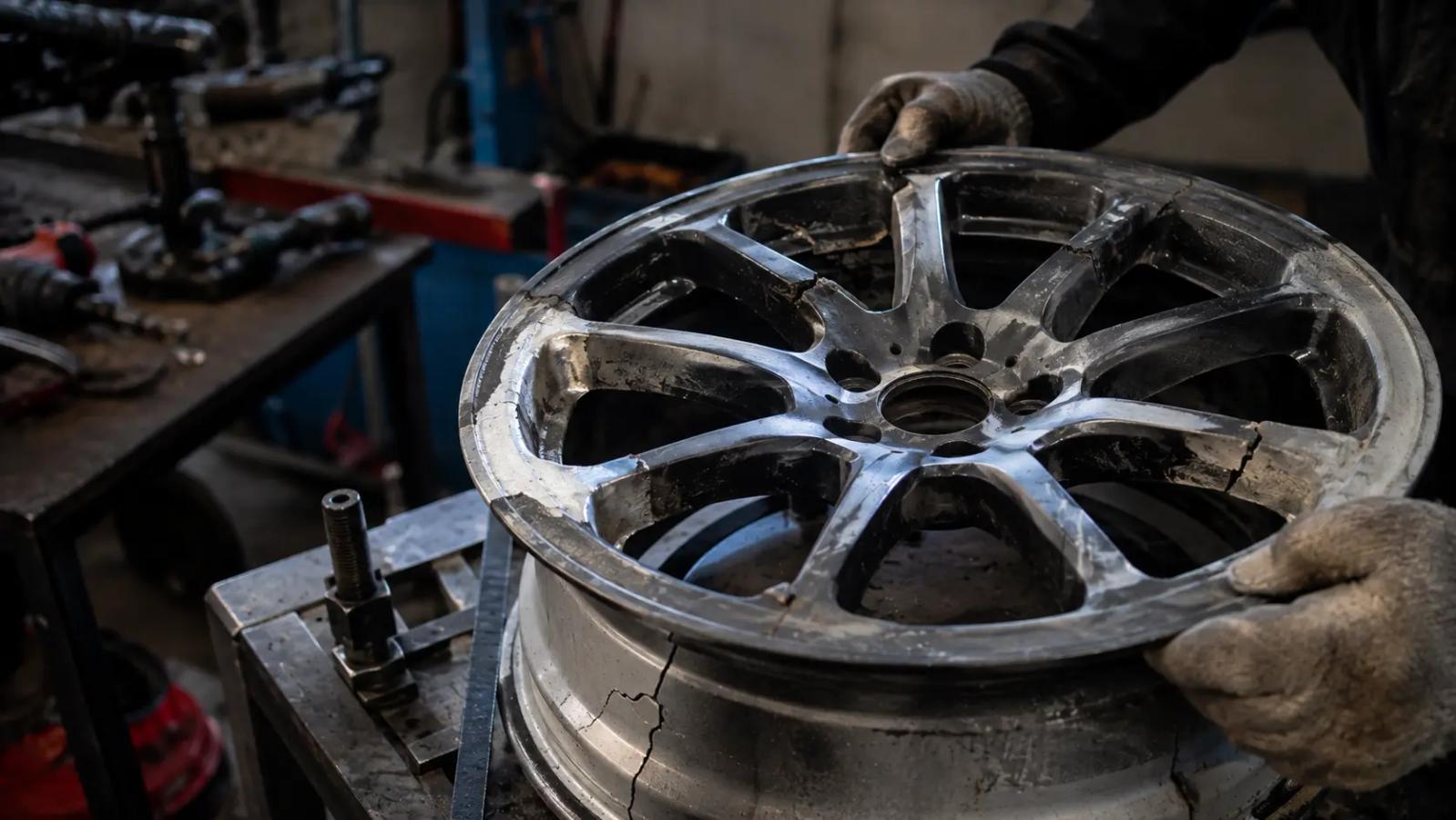
There's also a durability conversation worth having honestly. A properly executed weld holds up, but the metal at the edge of it isn't the same as it was before, so a repaired wheel deserves a periodic look, not the assumption it's fixed for good.
This isn't just how we see it. Across Orange County, the shops that actually know what they're doing tend to draw the line in the same place: weld the lip and barrel, decline the spoke and center face. A shop that won't touch a crack in a critical area is telling you the truth before charging you for something that won't hold.
Where to Get a Cracked Rim Welded in Santa Ana
"Can this actually be fixed, or am I just wasting money?" That's the question we hear most from people bringing in a cracked wheel, and it deserves a real answer, not a sales pitch. We've been repairing and restoring alloy wheels in Santa Ana since 2010, which means we've seen enough of these to tell you honestly, not just optimistically, what your wheel actually needs.
Every wheel that comes through our shop gets assessed in person before we say yes to a repair. Crack location, the metal it's made from, how many fractures, whether there's prior damage we need to account for first. Wheel straightening, if the rim is bent as well as cracked, generally happens before any welding starts, since welding a wheel that's still out of shape just locks the deformation in. If the damage is too far gone, we'll tell you that directly. Recommending a wheel you shouldn't drive on isn't a repair, it's a liability we're not willing to hand back to you.
Once a repair gets the green light, the wheel goes through welding, machining, and finishing in one visit to the shop, whether that means matching the factory look or setting you up for a full custom repaint or powder coat while it's already off the car. You're not chasing the wheel across multiple appointments or shipping it out to a specialist somewhere else.
A crack that's fine to drive on today isn't guaranteed to stay that way. If you've got a damaged wheel, the fastest way to know where you actually stand is to bring it in and let us look at it directly, before a minor fix turns into a bigger decision.