



How to Clean Powder Coated Wheels Without Stripping the Coat

To clean powder coated wheels, use mild soap, water, and a soft brush, then rinse and dry before anything sits long enough to bake in the sun. That's the whole answer in one sentence. The part nobody tells you is that the wrong cleaner, one aggressive spray from an auto parts shelf, can strip away months of protection in a single wash. Most people who ruin a fresh powder coat never realize it happened until the shine is already gone.
Why Powder Coat Needs Different Care Than Paint
A lot of wheel owners treat powder coats like it's bulletproof paint, and that assumption causes most of the trouble. Traditional paint is sprayed wet and left to dry. Powder coat is applied as a dry powder, electrostatically charged so it clings to the wheel, then baked at high heat until it cures into a hard, uniform shell, the electrostatic and cure process behind it is the whole reason it holds up longer than paint in the first place. That cure process is what gives powder coat its edge over paint: better resistance to chipping, fading, and corrosion, and a finish that holds up to daily brake dust and road grime far longer.

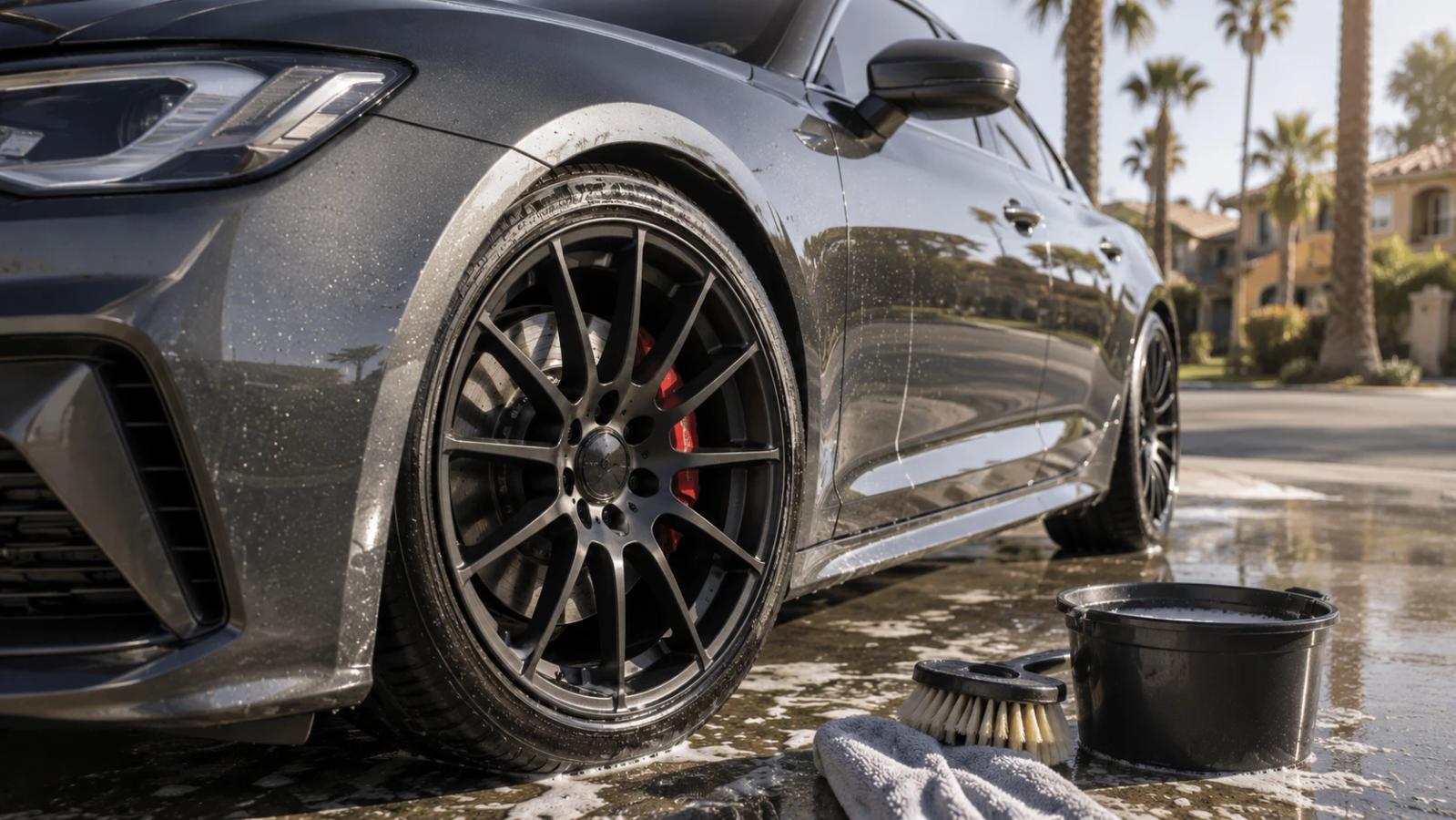
But durable doesn't mean indestructible. The same heat-cured coating that resists everyday wear can still be degraded by the wrong chemical, and once it's compromised, it doesn't fail gracefully. Paint fades and can be buffed back to life. Powder coat, because it's a cured finish rather than a wet-applied one, stains, dulls, or lifts at the edges instead, and repairing a damaged section usually means recoating the whole wheel, not just touching up a scratch.
What You Need to Clean Powder Coated Wheels
You don't need a garage full of detailing products to do this right. A bucket of water, a pH-neutral car wash soap, a dedicated wheel cleaner if the wheels haven't been washed in a while, a soft-bristle brush for the barrel and lug nut areas, a couple of clean microfiber towels, and a protectant if you're finishing with one will cover almost every situation.
Steps to Clean a Powder Coated Wheel
- Park in the shade. Cleaning a hot wheel causes water spots and streaking, since soap dries before it can lift the dirt.
- Rinse first. Yes, you can pressure wash powder coated wheels, keep the nozzle on a low-pressure, wide-fan setting and hold it at least a foot away so you're clearing loose grit without blasting into gaps or grinding sand into the coat.
- Apply cleaner and let it dwell. Give it a few minutes to loosen brake dust before you scrub.
- Brush gently, not aggressively. Work the soft brush into the barrel, around the lug nut area, and along any painted accents; the coated surface handles a light touch fine and doesn't need force.
- Rinse thoroughly. Leftover soap residue attracts dirt and can leave a dull film if it isn't fully flushed.
- Dry immediately. Water spots are practically guaranteed once direct sun and open air get to it first, so a microfiber towel beats waiting it out.
- Protect, if you're going the extra step. This adds a sacrificial layer that takes the abuse instead of your powder coat.
None of these steps are complicated on their own. People usually go wrong by skipping the dwell time, using a cleaner that's stronger than it needs to be, or scrubbing like they're trying to remove a stain instead of just dirt.
What Actually Damages a Powder Coat Finish
Most damage doesn't come from washing too often. It comes from washing with the wrong product. Acidic wheel cleaners, the kind marketed as "instant" or "no scrub," are formulated to eat through brake dust fast, and that same chemical reaction can eat into your clear coated topcoat if it's left on too long. Anything with a pH below 5 or above 9 falls into that risky range. So does anything labeled a compound, a polishing pad meant for correcting paint, or a degreaser pulled off a shelf meant for engine bays, not wheels.

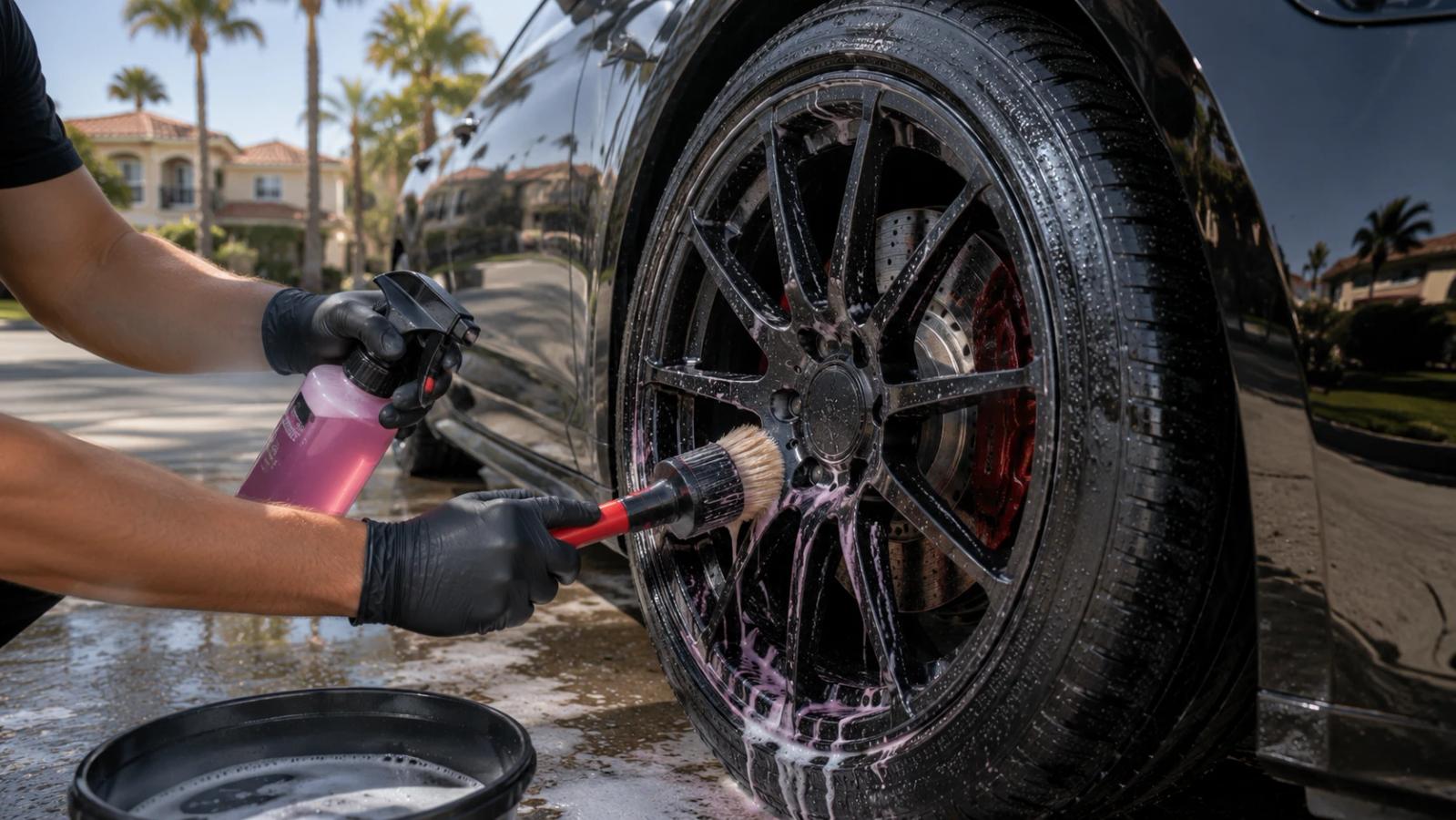
Read the instruction label on any product before it touches the wheel. If it warns you to avoid contact with painted or coated surfaces, that warning applies here too. And skip the harsh chemicals entirely if you can get the same result with soap, water, and a little patience.
Cleaning Gloss Black and Custom Powder Coat Finishes
Gloss black wheels earn a special mention because the manufacturer process that makes gloss black flow evenly through the powder gun also makes the finish softer than most other colors. That means swirl marks show up faster, and an aggressive brush or towel will leave marks that a satin or matte finish would hide. If your wheels are freshly coated in gloss black, stick to the gentlest wash routine you can manage and save the wax for after the coating has had time to fully cure.
Forums like Scatpack Nation get lively over this exact question. Ask a hundred owners what wheel cleaner they trust and you'll get eighty different answers, most of them contradicting each other. The common thread is worth listening to: whatever you use, test it on a small area first, and never leave it on longer than the label says.
Should You Wax or Ceramic Coat Powder Coated Wheels?
A clean wheel that goes unprotected just gets dirty again faster. A wax or ceramic coating built for wheels creates a barrier between the powder coat and everything that wants to break it down: brake dust, tar, road salt, and UV exposure.

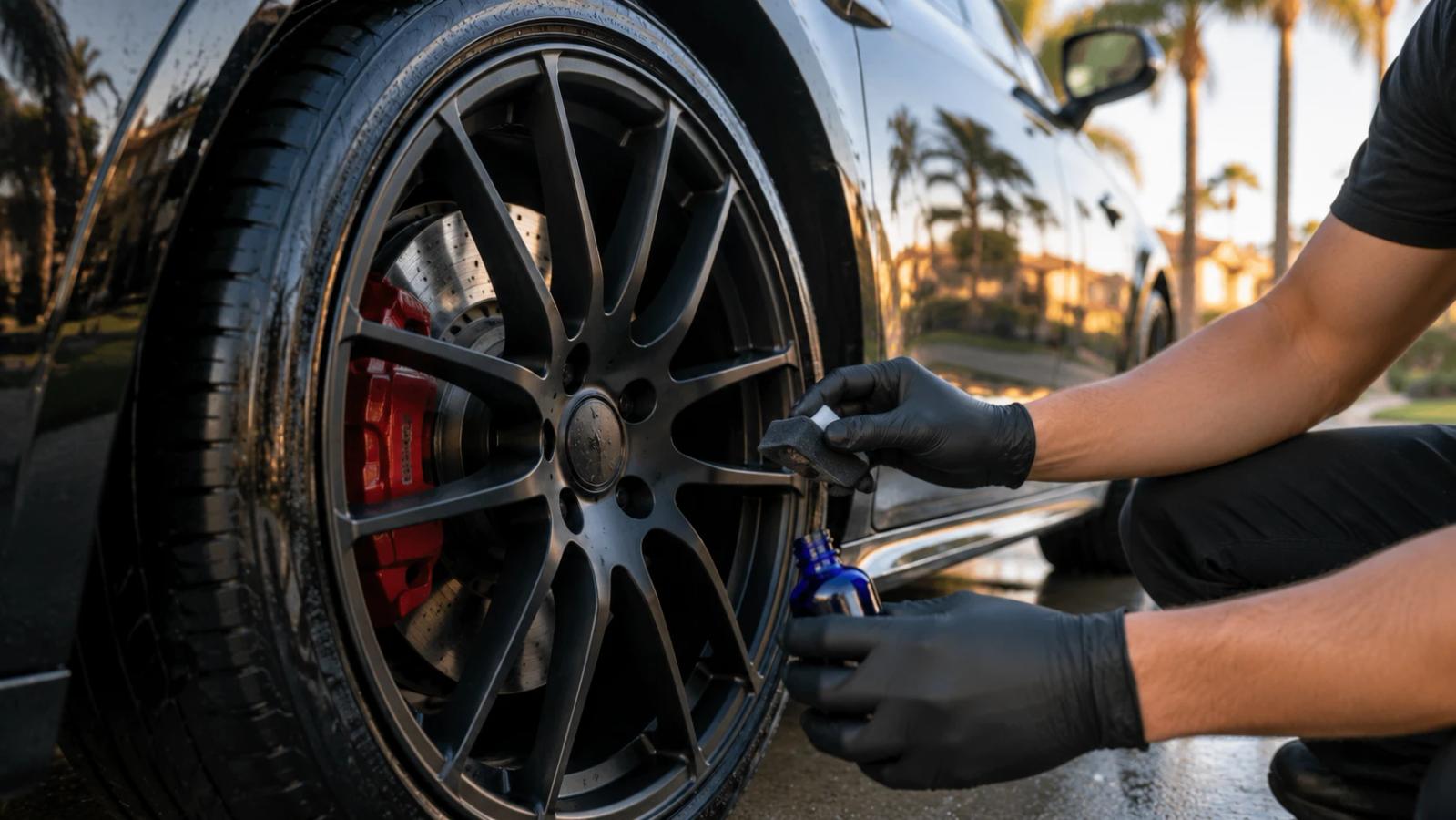
Ceramic coating in particular reduces how often you need to deep clean in the first place, since less grime actually bonds to the surface. It's not a required step, but it's the difference between wiping a wheel down every couple of weeks and hosing it off once a month.
Signs Your Powder Coated Wheel Needs Repair, Not Cleaning
Every so often, cleaning a wheel doesn't just reveal dirt. It reveals a chip at the edge of the barrel, a patch where the coating has started lifting, or corrosion creeping in under a spot that's been chipped for months without anyone noticing. Once the coating is broken, moisture gets underneath it and the damage spreads even if you keep washing carefully around it. A repair problem now, not a cleaning one, and it's worth knowing other signs your wheel needs professional attention beyond what shows up during a wash.
If that's what you find, the fix isn't a better cleaner. It's getting the wheel stripped, repaired, and recoated before a small chip turns into a wheel that can't be saved. That's the kind of call we get regularly at Metalworks & Tire Place in Santa Ana, usually from someone who was just trying to get their car detailed and noticed something they hadn't seen before.
Wanting a second opinion before it gets worse doesn't cost anything to find out. Bring the wheel in, or send a few photos through our contact form, and you'll know whether you're looking at a quick repair or a full recoat before you spend another minute worrying about it. Or call (714) 654-1599 and describe what you're seeing.
How Often Should You Clean Powder Coated Wheels?
In hot, dusty conditions, some maintenance guides recommend cleaning as often as every week or two rather than waiting until the wheels look visibly dirty.
Wheels take more abuse than almost anything else on a car, and the cleaning routine most people skip is the one thing standing between a wheel that lasts a decade and one that needs recoating in two years. Rinse before you scrub, keep the chemicals mild, dry it before the sun does the drying for you, and look closely while you're down there.
For Santa Ana drivers logging freeway miles through brake dust, sun exposure, and daily commuting grime, routine cleaning is cheaper than wheel restoration, every time. If something looks off, that's worth a second opinion before it gets worse.