



Curb Rash Repair: How to Fix Scratched & Scuffed Rims

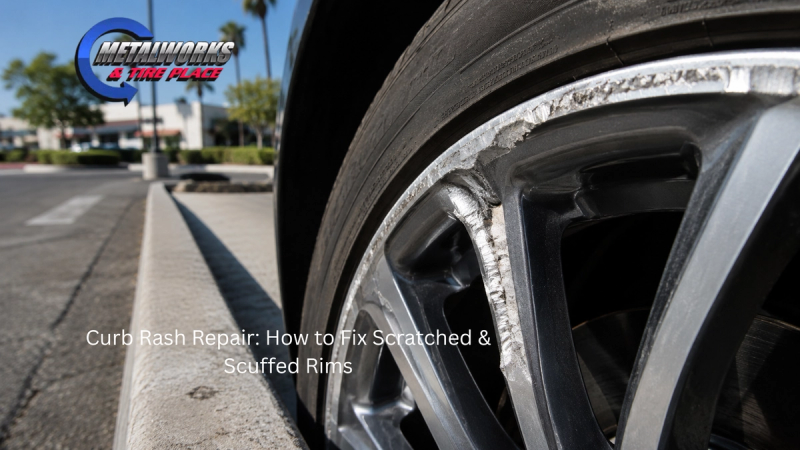
Curb rash is almost always fixable, and in most cases it isn't a safety problem. A scraped wheel is a cosmetic issue first. The finish, and sometimes the metal underneath, has been ground away, leaving raw aluminum exposed. That exposed metal won't compromise your wheel's structure right away, but it does open the door to corrosion that spreads under the surrounding finish and turns a small scuff into a much bigger (and pricier) problem.
That's why most curb damage is worth addressing early rather than ignoring. The repair itself is routine for a shop that handles wheel refinishing regularly. You don't need a brand-new wheel, and you don't need to settle for a DIY touch-up that never quite matches.
What's Actually on Your Wheel
That rough, scraped strip where your wheel's finish used to be has a name. Curb rash is the damage that happens when a wheel scrapes against a hard surface like a concrete curb, parking block, or raised island. The friction grinds away the finish and, in more severe cases, eats into the metal itself.
You'll usually see it as:
- A rough strip along the outer edge of the wheel where the paint, clear coat, or powder coat has been removed down to bare metal
- Grooved or gouged aluminum where the impact was deeper
- Jagged edges on the wheel lip where the metal has been physically bent out of shape
- A visible color mismatch between the damaged area and the rest of the wheel
Curb rash ranges from a light scuff that's barely visible from a few feet away to deep gouging that removes real material from the wheel. The severity determines the repair approach, but even severe cases are fixable.
Should You Be Worried?
For most drivers, no. Curb rash is a cosmetic problem that doesn't typically affect the structural integrity of the wheel, the tire's air seal, or the wheel's ability to roll true.
Two situations do need more immediate attention:
- The scrape is deep enough to reach the area where the tire seals against the wheel. If that sealing surface is damaged, air can slowly leak out. You'll notice this as a tire that keeps losing pressure even though there's no visible puncture.
- The bare aluminum is left exposed to the elements. Without a protective finish, the exposed metal oxidizes. In coastal areas, the combination of moisture, salt air, and brake dust speeds up corrosion. What starts as a cosmetic scrape can develop into pitting, bubbling under the surrounding finish, and eventually a rough, corroded surface that's harder and more expensive to fix.
Curb rash won't put you in danger immediately, but it will get worse and cost more to fix the longer you leave it. Addressing it early is always the smarter move.
How Severe Is the Damage?
Not every scraped wheel needs the same repair. A light scuff may only need sanding and refinishing, while deeper gouges or a bent lip require more involved work.
Light Scuffs and Surface Scratches
If the finish is scraped away but the aluminum underneath is still smooth, the damage is mostly cosmetic. There is no deep gouging or deformation to deal with.
These repairs are usually straightforward: the damaged area is sanded smooth, prepared, and refinished.
Medium Gouges and Grooving
Deeper curb contact can leave visible grooves or scoring along the wheel lip. Run your hand over the damaged area and you'll usually feel the rough, uneven surface where material has been removed or displaced.
The damaged area is shaped back to the original contour before it is refinished. The exact repair method depends on the depth and extent of the gouging.
Deep Damage With a Bent Lip
Some impacts do more than scrape the finish. They can bend or deform the outer lip, leaving metal pushed inward or creating jagged edges.
This requires more than surface refinishing. The lip may need to be straightened or reshaped before the wheel is refinished. If the damage reaches the tire's sealing surface, the wheel should also be checked to make sure it can still hold air properly. A cracked wheel or one with severe deformation may need to be replaced rather than repaired.
What a Proper Shop Repair Actually Looks Like
A real curb rash repair is a multi-step refinishing process designed to make the damaged area look exactly like it did before the curb ever touched it. Here's what happens during a professional repair:
Step 1: Inspection and Damage Assessment
The technician examines the wheel to determine the depth and location of the damage. They're checking whether it's purely cosmetic, whether the tire's sealing surface is involved, and whether there's any hidden structural damage like a hairline crack that may have resulted from the same impact. They'll also note the existing finish type (paint, powder coat, machined, or polished) because the repair needs to match.
Step 2: Wheel Removal and Tire Protection
For most curb rash repairs, the wheel comes off the vehicle. If the damage is limited to the outer face, the tire may stay mounted, but the technician protects it with masking tape and shielding during sanding and refinishing. For deeper repairs that involve the inner barrel or the tire's sealing surface, the tire is fully removed for proper access and pressure testing.
Step 3: Sanding and Reshaping
The damaged area is sanded down using progressively finer grits of sandpaper. This removes the jagged edges, smooths out the gouging, and creates a uniform surface for refinishing. For deeper gouges where material has been removed, the technician fills the area with wheel-grade metal filler or builds up the surface with precision welding, then sands it back to the original contour. This step separates a professional repair from a DIY touch-up: the goal is to recreate the wheel's exact original shape, not just cover the damage.
Step 4: Surface Prep, Priming, and Color Matching
Once the damaged area is smooth and shaped, the wheel is cleaned, masked, and primed so the color coat adheres properly. A professional shop then color-matches the exact shade, whether it's factory silver, gloss black, gunmetal, bronze, or a custom color. Finish options include:
- Liquid paint: color-matched and clear-coated for a factory-look finish. Good for standard painted wheels.
- Powder coat: a thicker, more durable finish that's baked into the metal. Resists chips, brake dust, and UV fading, making it ideal if you want the repaired wheel to hold up longer than the original factory finish. For a deeper comparison of how powder coating stacks up against paint in durability, color range, and cure time, see this breakdown of wheel powder coating options.
- Machined finish: if the wheel originally had a machined aluminum face, the repaired area can be re-machined to restore the reflective look, then clear-coated.
- Polished aluminum: for wheels with a polished lip or full polished face, the repaired area is polished to match the surrounding metal.
Step 5: Clear Coat and Cure
A clear coat goes over the color coat (for painted and machined finishes) to protect the surface and set the correct level of gloss. The wheel is then cured, either through air-drying or heat-curing depending on the finish system used.
Step 6: Reassembly, Balance, and Final Inspection
The tire is remounted (if it was removed), the wheel is balanced, and the assembly goes back on the vehicle. The technician does a final visual inspection to confirm the repair is invisible and the finish matches the rest of the wheel.
Done right, even a severely curbed wheel should look like the damage never happened. Curb rash is just one of several wheel damage types worth understanding, so if your wheel also has a bend, crack, or corrosion, it helps to recognize the difference before deciding on a repair path.
Why the Driveway Fix Rarely Holds Up
Curb rash is the one type of wheel damage where DIY is most tempting and most commonly attempted. There's no shortage of YouTube tutorials and kits showing how to fix it at home with sandpaper, filler, and touch-up paint.
Some of these produce acceptable results for very light, superficial scuffs. But there are real limits to what you can achieve in a driveway.
Where DIY falls short:
- Color matching. Store-bought touch-up paint comes in generic shades (silver, black, gunmetal) that rarely match your specific factory color. Even when the base color is close, the metallic flake size, tint, and gloss level are usually off. The result is a visible patch that looks different from the rest of the wheel under sunlight.
- Deep gouge filling. Filling gouges with hardware-store body filler produces a repair that looks okay initially but doesn't hold up to heat, moisture, and road debris. Professional repairs use wheel-grade materials that bond permanently to the aluminum.
- Finish durability. Rattle-can clear coat is thin and soft compared to a professionally cured clear coat or powder coat. It chips, peels, and fades within months, especially on a wheel exposed to brake heat, road salt, and regular washing.
- Bent lips. If the curb rash includes a bent or deformed lip, DIY sanding won't fix it. The lip needs to be reshaped with specialized tools before any refinishing can happen.
DIY curb rash repair is fine if you just want to cover bare metal on a daily driver and aren't concerned with a perfect match. If you care about how the wheel looks, or you're planning to sell or trade the vehicle, a professional repair will always look noticeably better and last significantly longer.
How Fast You'll Be Back on the Road
Most curb rash repairs are done within a few business days. The exact timeline depends on how deep the damage is and which finish you choose:
- Light scuffs and cosmetic refinishing: typically 1 to 2 business days
- Medium gouges requiring filling and color matching: 1 to 3 business days
- Deep damage with lip straightening: 2 to 3 business days
- Full wheel refinish with powder coat: 2 to 3 business days (powder coat requires a curing cycle)
- Multiple wheels at once: often more efficient since the prep and spray processes can be batched
When a shop handles every step in-house rather than outsourcing, those timelines stay predictable instead of slipping because of a third party's backlog.